
⭐⭐⭐⭐ (Goodreads: 4.09)
GENRE: Historical Fiction
PART OF A SERIES? Yes (#5 of Freedman/Johnson series)
WORTH READING? Yes
SUMMARY:
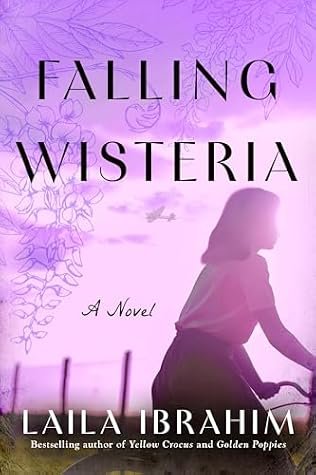
Falling Wisteria is set in Berkeley, California, during the Second World War and follows Kay Lynn Brooke as the war begins to change life for her, her family and those around her.
Kay Lynn has plenty to deal with at home, but the growing tensions of the war also put pressure on her friendship with Kimiko, who is Japanese American. As the years of war unfold, Kay Lynn has to navigate changes she could never have anticipated, while trying to hold on to the people she loves.
This is a story about friendship, family and the impact of war on ordinary people, with plenty of historical detail woven through the story.
Opening lines: “Mum prided herself on her ability to talk openly and honestly with me about anything. But she didn’t reveal her deepest shame until her death-bed.
There were a couple of things that bothered me about Falling Wisteria. The first was repetition. Twice, within a span of about ten pages, the reader is told the same thing, almost verbatim. This repeating happened on a few occasions, and that’s something that always annoys me in books. The biggest offender was the phrase “don’t borrow trouble,” which has been beautifully passed down through the generations. I’ve loved that it’s appeared in every book in this series, but in this last book, it would have been used at least five times, I think (I only had the audiobook, so I can’t be sure of the precise number).
The second aspect that frustrated me was the language skills and comprehension of the young children. Having been a primary school teacher for much of my life, as well as raising two children of my own, I did not find the children’s language realistic in Falling Wisteria — they said things that did not accurately represent their age. Even the way the adults speak to the young children is not realistic. E.g. the mother says to her daughter, “President Roosevelt said there will be no discrimination against minorities for government work, with Executive Order 8802… and he said people who are of Japanese ancestry…. had to relocate away from the west coast…” No parent would say it like that to a youngster. Unfortunately, I found that this occurred in the other books in Ibrahim’s series, too, so I think this is her weakness.
But Ibrahim’s biggest strength is her ability to tell great stories. She makes you really care about the characters and enjoy finding out what’s happening in their lives. I loved how each book in this series had flower motifs, and especially that crocuses featured all the way down the line. To really feel engrossed in these families’ histories, do yourself a favour and start with Yellow Crocus. I’m sure you will gain pleasure from reading this series and will particularly appreciate how well Ibrahim represents strong women.
Click here if you’d like to read #1 Yellow Crocus
Click here if you’d like to read #2 Mustard Seed
Click here if you’d like to read #3 Golden Poppies
Click here if you’d like to read #4 Scarlet Carnation
N.B: I earn from qualifying purchases as an Amazon affiliate